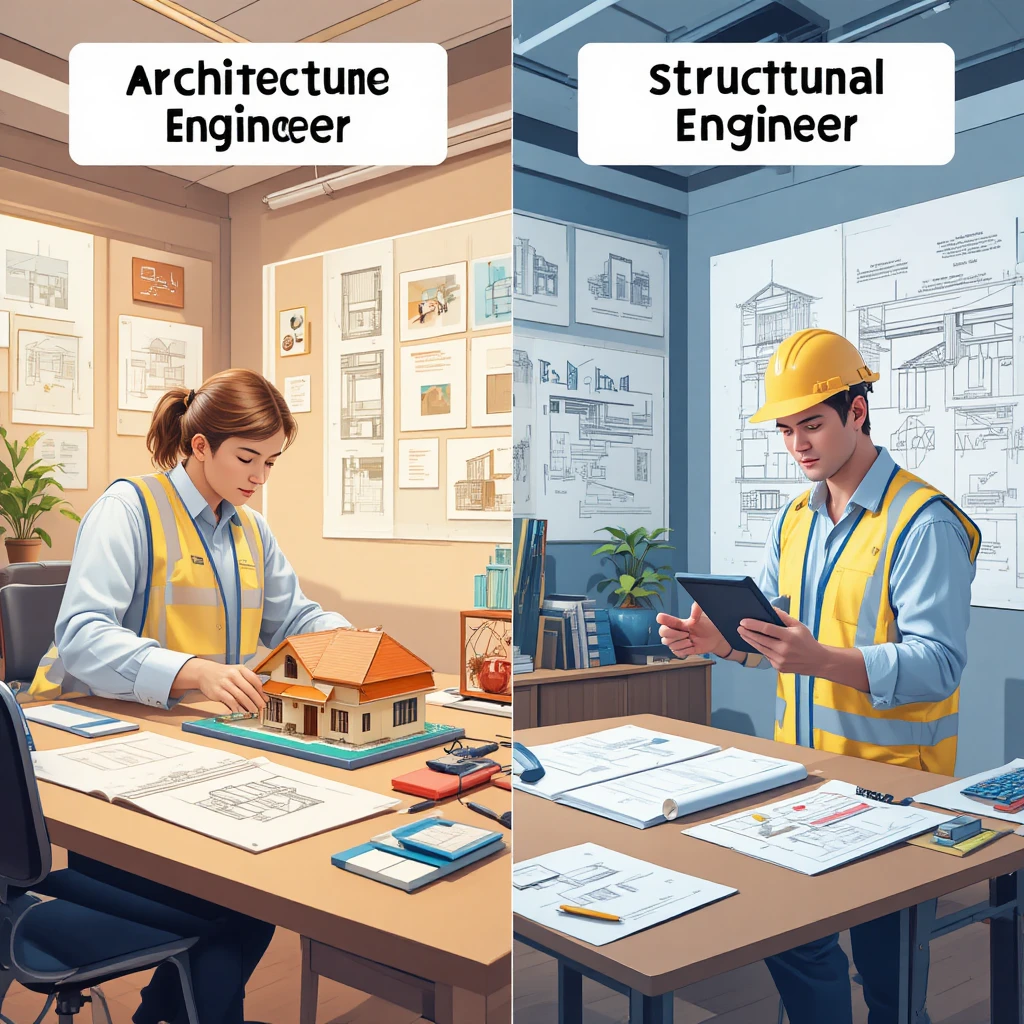
The Difference Between Architectural Engineering and Structural Engineering
Introduction In the construction and building industry, architectural engineering and structural engineering are two closely related but distinct disciplines. Many students and even professionals often confuse these fields because they work together on the same projects and share common goals creating safe, functional, and durable buildings. However, each discipline has a unique focus, skill set, and responsibility. Understanding the difference between architectural engineering and structural engineering is essential for students choosing a career path and professionals aiming to specialize or collaborate effectively. This article explains both fields in detail, highlights their differences, and discusses how to learn them using modern software tools.
What Is Architectural Engineering? Architectural engineering focuses on the design, functionality, and performance of buildings. It bridges the gap between architectural creativity and engineering systems, ensuring that buildings are efficient, comfortable, sustainable, and practical. Key Focus Areas of Architectural Engineering: * Building layout and space planning * Integration of structural, mechanical, electrical, and plumbing (MEP) systems * Lighting, acoustics, and ventilation * Energy efficiency and sustainability * Building materials and construction technology * Building Information Modeling (BIM) Architectural engineers work closely with architects to translate design concepts into technically feasible and efficient buildings.
What Is Structural Engineering? Structural engineering is a specialized branch of civil engineering that focuses on the strength, stability, and safety of structures. Structural engineers ensure that buildings and infrastructure can safely resist all applied loads and forces. Key Focus Areas of Structural Engineering: * Structural analysis and load calculations * Design of beams, columns, slabs, and foundations * Earthquake and wind-resistant design * Material behavior (concrete, steel, timber) * Structural safety and durability * Compliance with design codes and standards Structural engineers are responsible for ensuring that structures do not fail under normal or extreme conditions.
Core Differences Between Architectural Engineering and Structural Engineering Although both disciplines collaborate closely, their roles and responsibilities differ significantly. a) Main Focus * Architectural Engineering: Focuses on building functionality, comfort, systems integration, and overall performance. * Structural Engineering: Focuses on structural strength, load resistance, and safety. b) Design Perspective * Architectural Engineering: Concerned with how a building works and feels for occupants. * Structural Engineering: Concerned with how a building stands and resists forces. c) Scope of Work * Architectural Engineering: Covers building systems such as HVAC, lighting, acoustics, sustainability, and BIM coordination. * Structural Engineering: Covers structural elements such as foundations, frames, slabs, and load paths. d) Software Usage * Architectural Engineering Software: AutoCAD, Revit Architecture, BIM tools, energy analysis software, visualization tools. * Structural Engineering Software: ETABS, SAP2000, SAFE, STAAD, structural BIM and analysis tools. e) Collaboration Role * Architectural Engineering: Acts as a bridge between architects and engineers. * Structural Engineering: Works closely with architects to ensure designs are structurally feasible and safe.
Why Both Disciplines Matter Both architectural engineering and structural engineering are essential for successful construction projects. * Without architectural engineering, buildings may lack efficiency, comfort, and sustainability. * Without structural engineering, buildings would be unsafe and vulnerable to failure. Together, these disciplines ensure that buildings are functional, safe, economical, and sustainable.
The Future of Architectural and Structural Engineering The future of both fields is driven by technology, sustainability, and innovation. Future Trends Include: * Building Information Modeling (BIM) integration * Smart and green buildings * Advanced analysis and simulation tools * Digital twins and performance monitoring * Sustainable materials and construction methods * Automation and AI-assisted design Future Skills Needed in Both Fields: * Strong engineering fundamentals * Software proficiency * Understanding of sustainability principles * Collaboration and interdisciplinary skills * Continuous learning mindset Professionals who understand both architectural and structural aspects will have a strong competitive advantage.
Learning Architectural Engineering and Structural Engineering Learning these disciplines today requires both theoretical knowledge and software skills. Learning Architectural Engineering Architectural engineering focuses on building systems and design integration. Learning paths include: * Architectural design principles * BIM and architectural software * Building systems and sustainability * Real-world building projects Learning Structural Engineering : Structural engineering focuses on safety and strength. Learning paths include: * Structural analysis and design theory * Load calculations and code-based design * Structural design software * Practical design projects Learning Through SamoSkill : You can learn both architectural engineering software and structural engineering software through SamoSkill under its Courses section. SamoSkill offers: * Step-by-step courses for beginners and professionals * Training in architectural software such as AutoCAD and Revit * Training in structural software such as ETABS, SAFE, and SAP2000 * Practical, project-based learning * Industry-relevant skills aligned with real-world projects SamoSkill provides a structured platform to master both disciplines and their essential software tools.
Conclusion Architectural engineering and structural engineering are closely connected yet distinctly different disciplines. Architectural engineering focuses on how buildings function, perform, and serve occupants, while structural engineering ensures that buildings are strong, stable, and safe. For students, understanding the difference helps in choosing the right career path. For professionals, mastering collaboration between both fields leads to better project outcomes. With modern learning platforms like SamoSkill, acquiring skills in both architectural and structural engineering software has become more accessible and practical. Together, architectural and structural engineers shape the future of the built environment combining creativity, technology, and safety to build a better world.