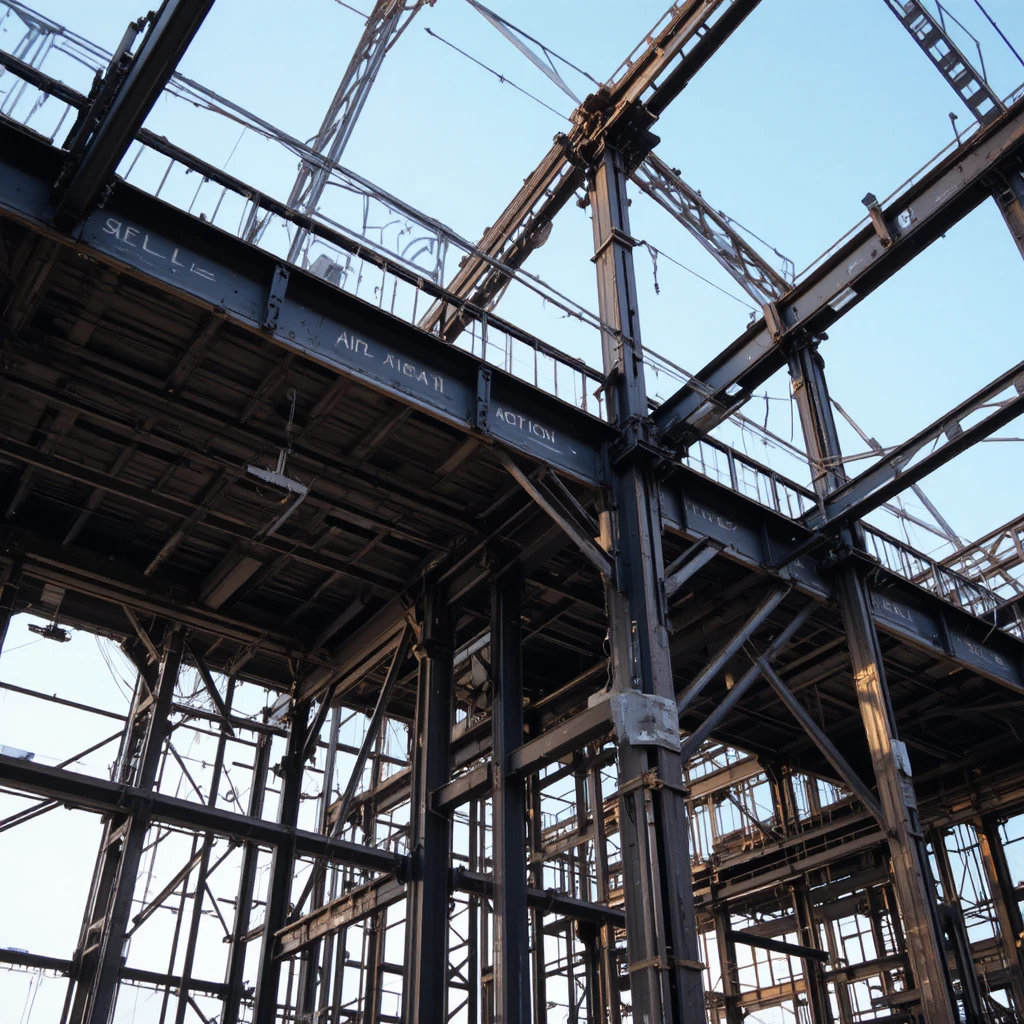
Steel Structure: The Framework of Modern Engineering
Introduction Steel structures are among the most important systems in modern civil and structural engineering. They form the backbone of skyscrapers, industrial buildings, warehouses, bridges, stadiums, airports, towers, and many large-scale infrastructure projects around the world. Due to steel’s high strength, flexibility, speed of construction, and adaptability, steel structures have become a preferred choice in contemporary construction. As urbanization and industrialization continue to grow, the demand for strong, lightweight, and sustainable structural systems has increased. Steel structures meet these demands efficiently. This article provides an in-depth and comprehensive overview of steel structures, covering their definition, components, behavior, advantages, design principles, construction methods, future trends, and learning pathways.
What Is a Steel Structure? A steel structure is a structure in which steel is the primary load-bearing material used to resist forces such as tension, compression, bending, and shear. Steel structures are designed to safely support loads and transfer them to the foundations. Steel is manufactured in controlled factory conditions and shaped into structural elements that are assembled on-site. This makes steel structures highly reliable and precise compared to many other construction systems. Types of Steel Structures : • Structural steel frame structures • Steel truss structures • Portal frame structures • Space frame structures • Composite steel–concrete structures • Pre-engineered steel buildings (PEB) Each type is selected based on span, height, load requirements, and functional use.
Materials Used in Steel Structures a) Structural Steel Structural steel is produced in various grades, each with specific mechanical properties such as yield strength, tensile strength, and ductility. Common steel products include : • I-sections and H-sections • Channels and angles • Hollow sections (RHS, SHS, CHS) • Plates and sheets b) Fasteners and Connections Connections are critical in steel structures and include : • Bolted connections • Welded connections • Riveted connections (older structures) The performance of a steel structure largely depends on the quality of its connections.
Structural Elements in Steel Structures Steel structures consist of different elements working together as a system: • Beams: Carry bending loads • Columns: Carry compressive loads • Bracing Systems: Resist lateral forces • Trusses: Efficiently span long distances • Girders: Main load-carrying beams • Plates: Used in connections and stiffening Each element is designed to perform a specific structural function.
Why Steel Structure Matters Steel structures play a vital role in modern construction for many reasons. a) High Strength-to-Weight Ratio Steel is much stronger than many other materials for the same weight, allowing longer spans and taller buildings. b) Speed of Construction Steel components are prefabricated, reducing on-site construction time significantly. c) Flexibility and Ductility Steel structures perform well under dynamic loads such as earthquakes and wind. d) Design Freedom Steel allows architects and engineers to design complex and innovative forms. e) Sustainability Steel is recyclable and reusable, making it an environmentally friendly material.
Behavior of Steel Structures Understanding how steel structures behave under loads is essential for safe design. a) Tension Behavior Steel performs exceptionally well in tension, making it ideal for trusses and cables. b) Compression and Buckling Steel columns must be designed carefully to prevent buckling. c) Flexural Behavior Steel beams resist bending efficiently with minimal cross-sectional size. d) Fatigue Behavior Steel structures subjected to repeated loads must be designed against fatigue failure. e) Fire Behavior Steel loses strength at high temperatures and requires fire protection systems.
Design Principles of Steel Structures Steel structures are designed using internationally recognized design codes and standards. Key Design Considerations : • Load types and combinations • Material properties • Stability and buckling • Connection design • Serviceability limits (deflection, vibration) • Fire and corrosion protection Design Methods : • Allowable Stress Design (ASD) • Load and Resistance Factor Design (LRFD) Modern steel design relies heavily on advanced structural analysis and modeling software.
Construction of Steel Structures Construction Process : 1. Fabrication of steel members 2. Surface treatment and coating 3. Transportation to site 4. Erection and assembly 5. Bolting and welding 6. Alignment and inspection Steel construction requires high precision and skilled workmanship.
Advantages and Limitations of Steel Structures Advantages : • High strength and durability • Lightweight compared to concrete • Fast construction • Reusability and recyclability • High quality control Limitations : • Susceptibility to corrosion • Fire protection requirements • Skilled labor needed • Higher initial cost in some cases Proper design and maintenance can effectively address these limitations.
Steel Structures vs Other Structural Systems Compared to concrete structures : • Steel is lighter and faster to construct • Concrete offers better fire resistance and mass Compared to timber structures : • Steel offers higher strength and durability • Timber is lighter and more sustainable in small-scale projects The choice depends on project requirements and environmental conditions.
The Future of Steel Structures Steel construction continues to evolve with technological advancement. Future Trends : • Highs strength and advanced steel grades • Modular and prefabricated steel systems • Composite steel concrete construction • BIM based steel design and detailing • Sustainable and Lowe carbon steel production These innovations aim to improve efficiency, safety, and sustainability.
Learning Steel Structure To master steel structures, learners must combine theory with practical skills. Key Skills to Learn : • Structural mechanics • Steel design principles • Connection detailing • Load analysis • Construction methods • Structural design software Learning Through SamoSkill SamoSkill ensures that every article published on the platform is supported by related courses. In the Courses section, learners can find: • Steel structure design courses • Structural analysis software training • Practical project-based learning • Beginner to advanced engineering pathways This approach helps students and professionals gain both knowledge and industry-ready skills.
Conclusion Steel structures are a cornerstone of modern engineering and construction. Their strength, flexibility, speed of construction, and sustainability make them ideal for a wide range of applications from industrial buildings to iconic skyscrapers. For students, understanding steel structures opens doors to diverse engineering careers. For professionals, continuous learning and adaptation to modern technologies are essential. Platforms like SamoSkill bridge the gap between theory and practice by offering in depth articles supported by practical, skills based courses. Steel structures will continue to shape the future of construction stronger, smarter, and more sustainable than ever.