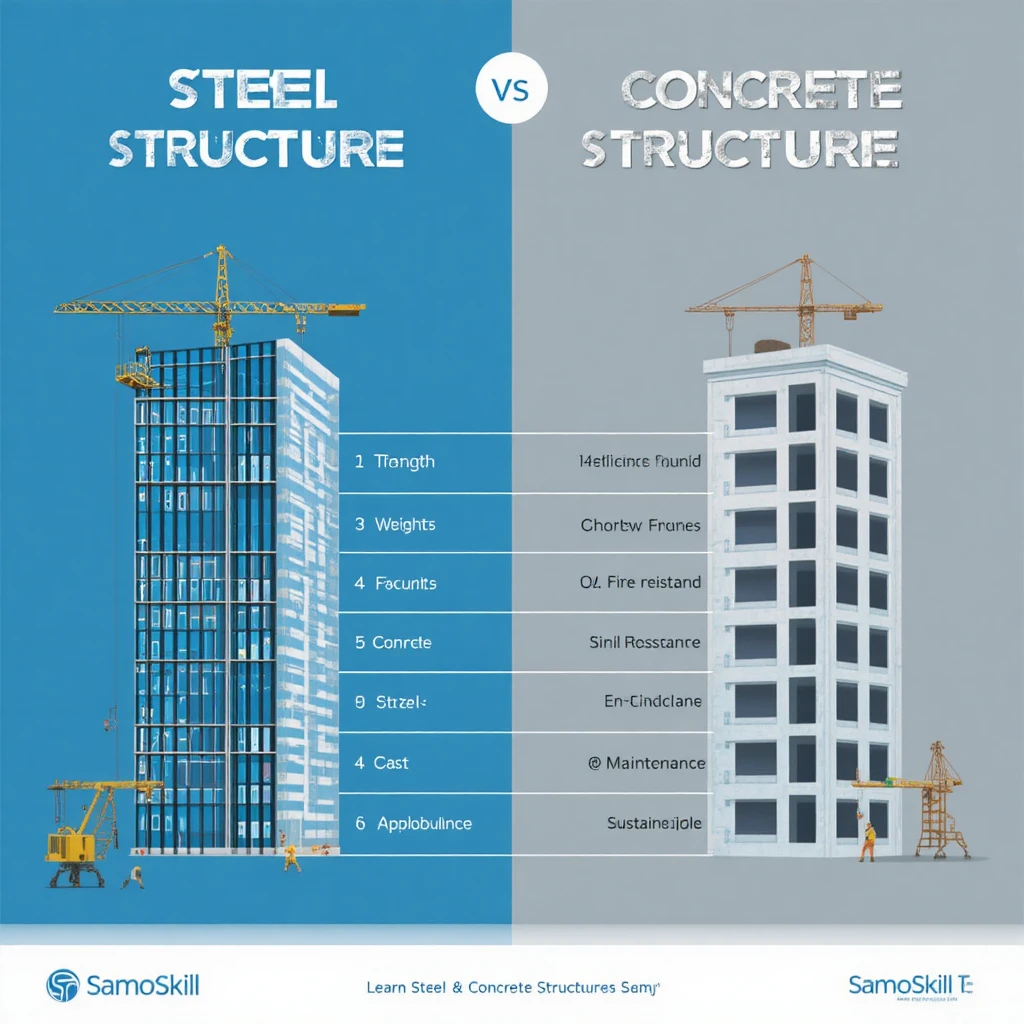
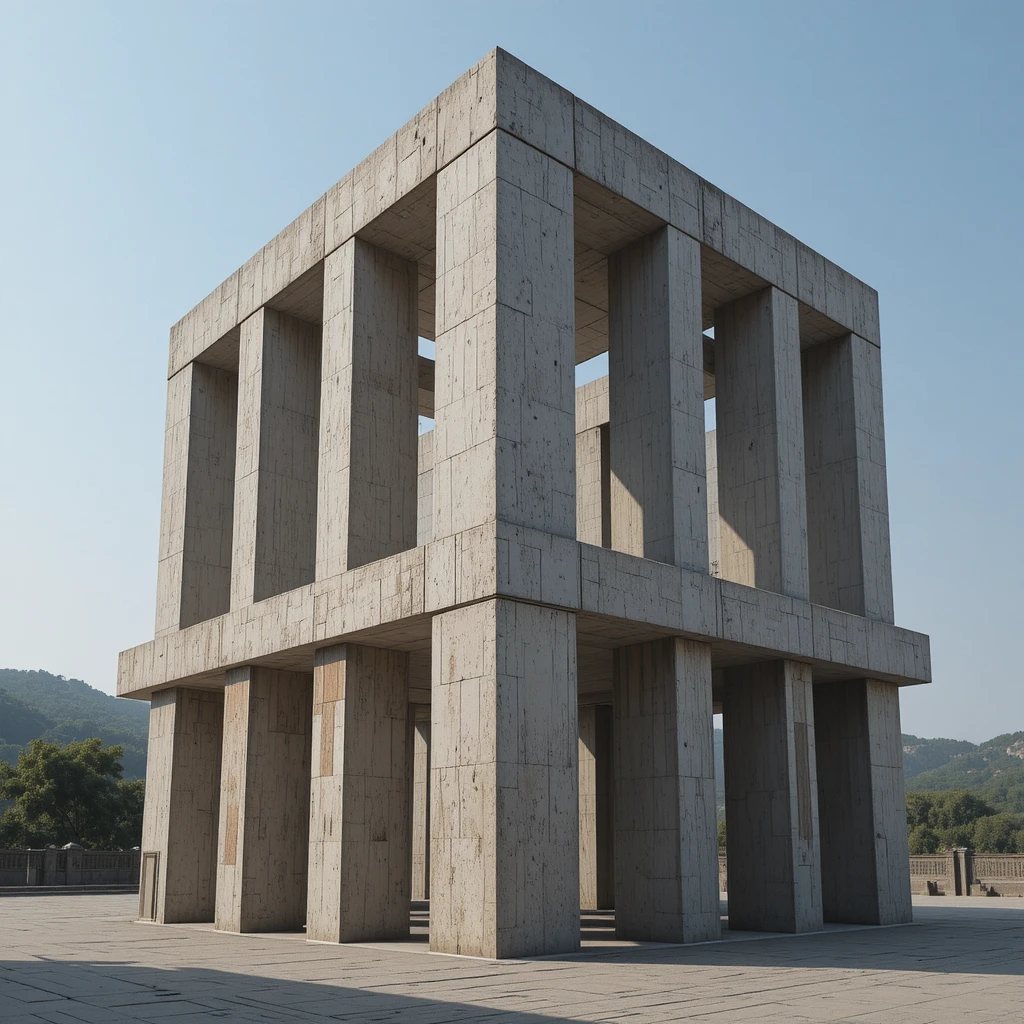
IntroductionSteel structures and concrete structures are the two most widely used structural systems in modern civil and structural engineering. Almost every building, bridge, industrial facility, and infrastructure project relies on one of these systems or sometimes a combination of both.Choosing between steel and concrete is not a simple decision. It depends on many factors such as project type, cost, construction speed, durability, environmental conditions, availability of materials, and long-term performance. Understanding the differences between steel and concrete structures is essential for students, engineers, architects, and construction professionals.This article provides a detailed and clear comparison between steel structures and concrete structures, covering materials, behavior, advantages, disadvantages, applications, sustainability, cost, and future trends. What Is a Steel Structure?A steel structure is a structure in which steel members such as beams, columns, trusses, and plates carry the loads and transfer them safely to the foundations.Steel structures are usually :• Fabricated in factories• Transported to site• Assembled using bolting or weldingCommon Applications of Steel Structures : • High-rise buildings• Industrial buildings and warehouses• Bridges and towers• Airports and stadiums• Pre-engineered buildings (PEB) What Is a Concrete Structure?A concrete structure is a structure in which concrete often reinforced with steel bars (reinforced concrete) or prestressing tendons resists loads.Concrete structures are typically:• Cast in situ (on-site) or precast• Strong in compression• Combined with reinforcement to resist tensionCommon Applications of Concrete Structures : • Residential buildings• Commercial buildings• Foundations and basements• Dams and retaining walls• Bridges and pavements Material Properties: Steel vs ConcreteSteel :• High tensile and compressive strength• Ductile and flexible• Lightweight compared to concrete• Manufactured with consistent qualityConcrete :• Very strong in compression• Weak in tension (needs reinforcement)• Heavy material• Properties depend on mixing, curing, and workmanship Structural Behavior Comparisona) Strength and Load Carrying Capacity• Steel: Excellent performance in tension, bending, and compression• Concrete: Excellent in compression, limited in tensionb) Ductility and Earthquake Resistance• Steel: Highly ductile, performs well during earthquakes• Concrete: Less ductile, but can be improved with proper detailingc) Deflection and Cracking• Steel: Larger deflections but no cracking• Concrete: Smaller deflections but prone to cracking Construction Speed and MethodSteel Structure :• Faster construction• Prefabricated components• Minimal site work• Suitable for tight project schedulesConcrete Structure :• Slower construction• Requires formwork, curing, and casting• Weather-dependent• More labor-intensive Cost ComparisonInitial Cost :• Steel: Higher material cost, lower construction time• Concrete: Lower material cost, higher labor and timeLifecycle Cost :• Steel: Higher maintenance (corrosion protection, fireproofing)• Concrete: Lower maintenance, longer service lifeCost-effectiveness depends on project type, location, and market prices. Durability and MaintenanceSteel Structures :• Susceptible to corrosion• Require protective coatings• Fire protection is necessaryConcrete Structures :• Resistant to corrosion and fire• Durable in harsh environments• Requires crack control and proper curing Sustainability and Environmental ImpactSteel100% recyclableReusable structural elementsEnergy-intensive productionConcreteUses natural materialsCement production emits high CO₂Long service life reduces replacement needsBoth systems can be sustainable if designed properly. Design Flexibility and AestheticsSteelLong spansSlender structural membersComplex and modern architectural formsConcreteMassive and solid appearanceFlexible formwork shapesBetter for architectural massing Fire ResistanceSteel: Loses strength at high temperatures, needs fireproofingConcrete: Naturally fire-resistantFire safety is a major factor in structural system selection. Typical Applications ComparisonAspectSteel StructureConcrete StructureHigh-rise buildingsExcellentVery goodResidential housingModerateExcellentIndustrial buildingsExcellentModerateBridgesExcellentExcellentSpeed of constructionVery fastSlowLong spansExcellentLimited Steel vs Concrete: Which One Is Better?There is no universal answer.Choose steel structure when:Speed is criticalLong spans are requiredLightweight construction is neededChoose concrete structure when:Fire resistance is criticalLocal materials and labor are availableLong-term durability is a priorityIn many modern projects, composite structures (steel + concrete) provide the best solution. The Future of Steel and Concrete StructuresFuture TrendsComposite construction systemsHigh-strength steel and concreteModular and prefabricated constructionBIM-based integrated designSustainable materials and low-carbon concreteThe future focuses on efficiency, sustainability, and smart construction. Learning Steel and Concrete StructuresTo become a skilled structural engineer, understanding both systems is essential.Key Learning AreasStructural analysisDesign codes and standardsSteel and concrete design principlesConstruction methodsStructural engineering softwareLearning Through SamoSkillAt SamoSkill, every technical article is supported by related professional courses. In the Courses section, learners can find:Steel structure design coursesConcrete structure design coursesStructural analysis and design software trainingPractical, project-based learningThis integrated learning approach helps students and professionals build real-world engineering skills on one platform. ConclusionSteel structures and concrete structures are both fundamental to modern construction. Each system has its strengths, limitations, and ideal applications. Understanding their differences enables engineers and decision-makers to select the most efficient, safe, and economical solution for each project.For students, mastering both systems builds a strong foundation for a successful engineering career. For professionals, continuous learning is essential to keep up with evolving technologies. Platforms like SamoSkill support this journey by combining in-depth articles with practical, skill-focused courses.In modern engineering, the future is not steel or concrete—it is the intelligent use of both.